
培育鑽
Lab-Grown vs Natural Diamonds — 5 Key Differences
Over the past five years, the lab-grown diamond market has expanded rapidly. From engagement rings to earrings and pendants, more and more clients are asking: "Natural or lab-grown — which should I choose?"
Difference 1: Formation and Production Time
Natural diamonds form more than 150 kilometres below the earth's surface, over 1 to 3 billion years, and are brought to the surface through volcanic activity. Lab-grown diamonds are created in a laboratory using HPHT (High Pressure High Temperature) or CVD (Chemical Vapour Deposition) technology, producing a 1-carat diamond in roughly 2 to 4 weeks.
Difference 2: Chemical and Physical Structure
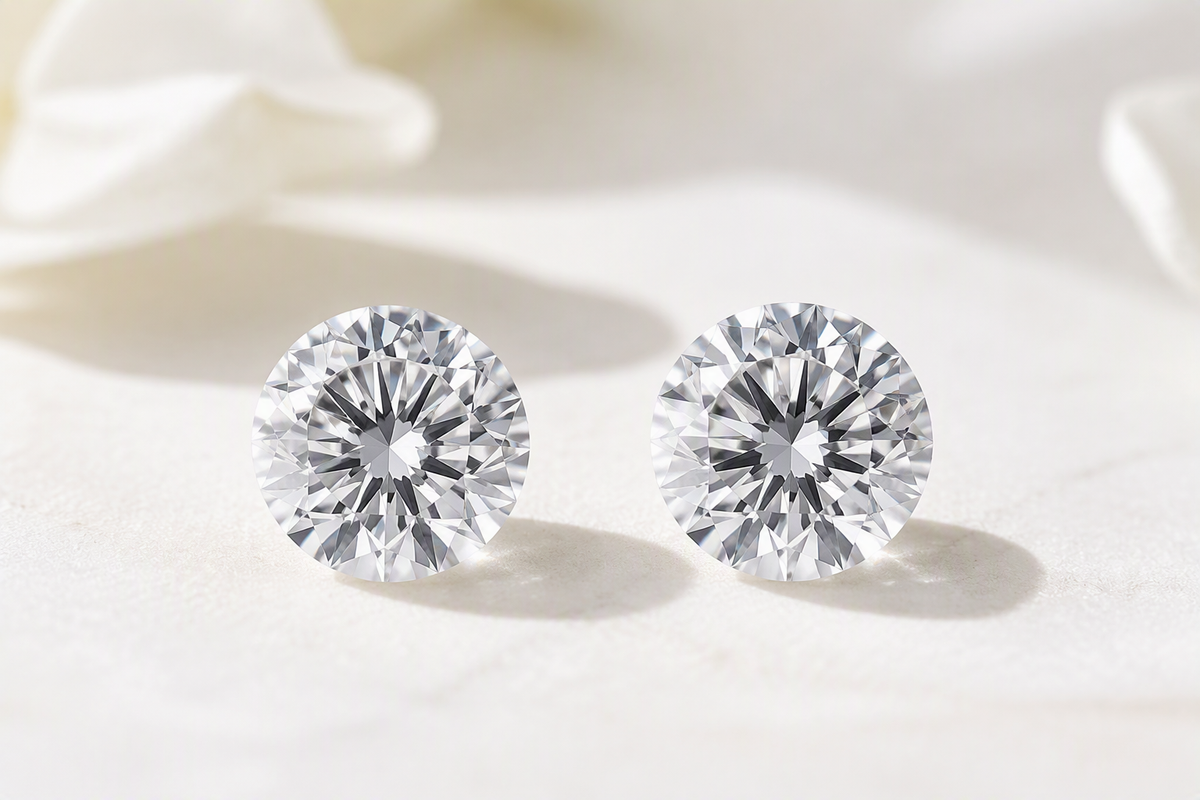
Both are pure carbon crystals, and their physical properties — hardness (10 on the Mohs scale), refractive index, density, fire and sparkle — are completely identical. Even a professional jeweller cannot tell them apart with the naked eye. Specialised equipment (such as the GIA iD100) is required to distinguish them through trace element characteristics.
Difference 3: Certification
Lab-grown diamonds are generally certified by IGI (1 carat and above), laser-inscribed "LAB GROWN" on the girdle for full transparency, while natural diamonds are certified by GIA.
Difference 4: Price Gap
For the same 4C specifications, lab-grown diamonds are priced at approximately one-third of natural diamonds. In other words, for the same budget, you can buy a diamond that is 50% larger, or of higher quality.
Difference 5: Value Retention and Emotional Value
Natural diamonds, due to their rarity and unique formation process, have relatively stable value retention in the secondary market. Lab-grown diamonds, as the technology matures and production capacity continues to expand, retain value less well, but falling production costs each year mean retail prices keep trending down, offering a clear value-for-money advantage.
On an emotional level, some clients value the storytelling of a "billion-year miracle from deep within the earth" and lean towards natural diamonds; others appreciate the contemporary value of lab-grown diamonds as "environmentally friendly, with zero mining".
CathyPaul's Recommendation
We offer both natural and lab-grown diamonds, without favouring either option. We suggest you consider the following three questions:
- Is your budget generous? If so, choose natural; if it's tight, choose lab-grown to maximise diamond size.
- Do you care about future resale value? If so, choose natural.
- Are you sensitive to environmental issues? If so, consider lab-grown.
Whichever you choose, CathyPaul provides an international grading certificate (where applicable) and lifetime maintenance.